Water kefir
- Base
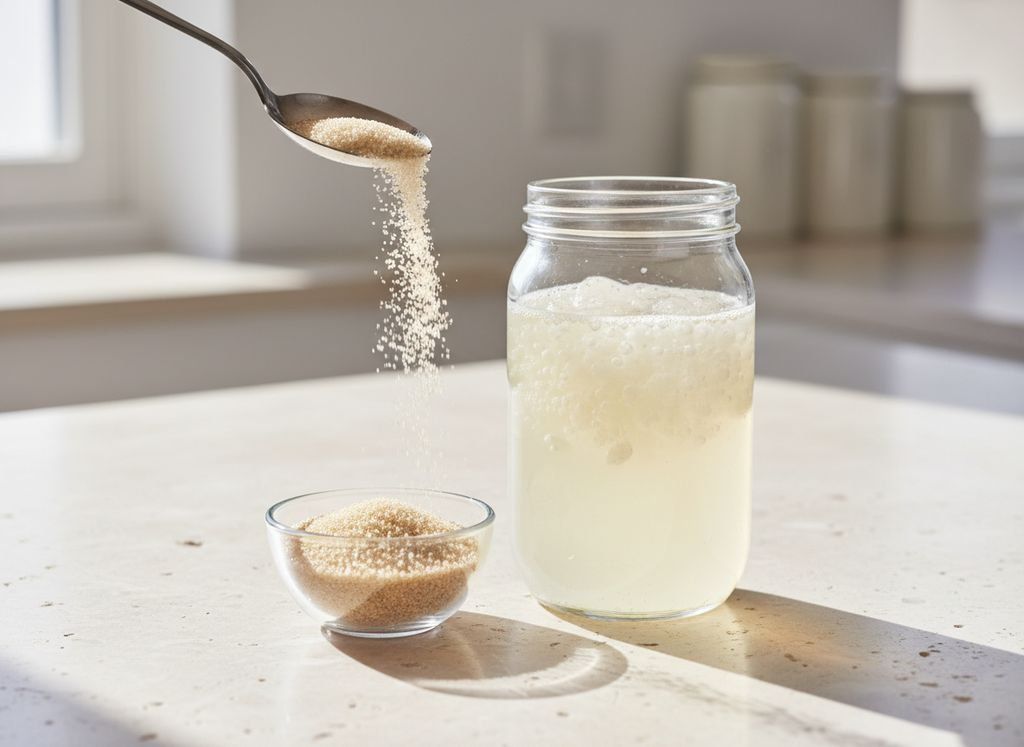
- Sugar water
- Culture
- Water kefir grains
- Caffeine
- None
- Taste
- Light, clean, tart
- Ferment
- 96 hours, in our case
- Carbonation
- From fermentation
- Dairy
- None
- Appearance
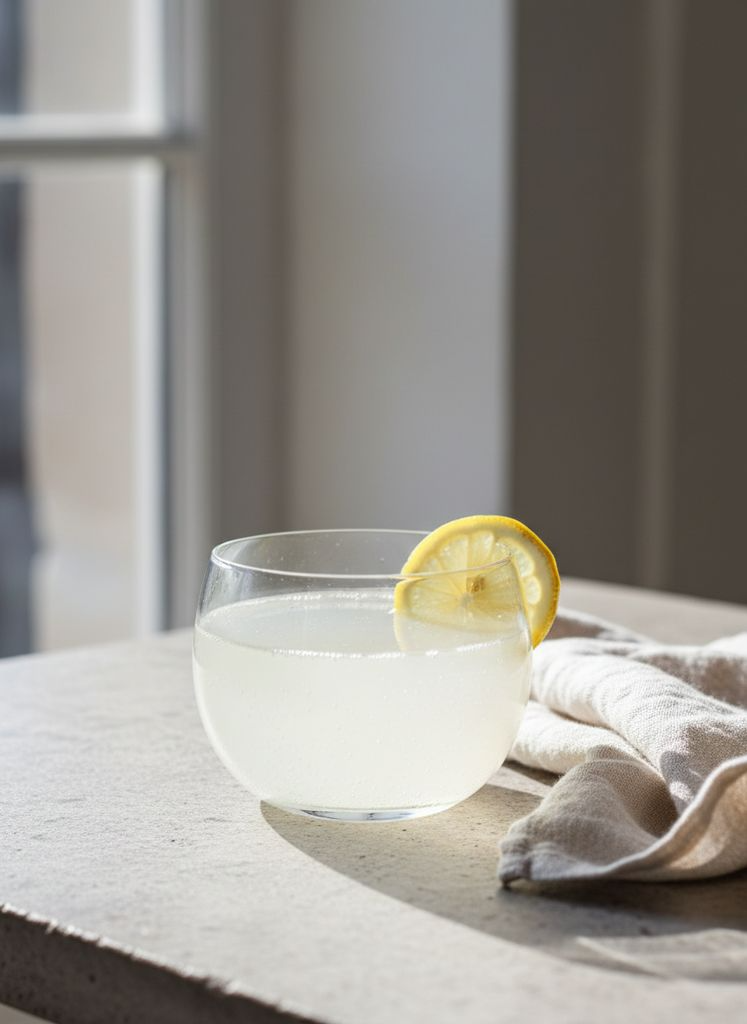
- Pours clear
Both fermented. Both fizzy. Shelved next to each other, made from completely different things.
Kombucha starts with tea. Water kefir starts with water. Everything downstream - the caffeine, the colour, the sharpness - follows from that.
Kombucha inherits caffeine from the tea it’s fermented with. Fermentation reduces it. It doesn’t remove it. How much is left depends on the tea and the brewer.
Water kefir has none, in any flavour, because there’s no tea in it at any point. If you’re drinking something in the evening, that’s the practical difference.
Kombucha’s culture produces acetic acid - the same acid that makes vinegar taste like vinegar. That’s the note people mean when they call kombucha an acquired taste.
Water kefir’s cultures produce mostly lactic acid instead, which reads as clean and tart rather than sour and sharp. It’s a gentler drink. If kombucha has been too much, this is usually the one that works.
Both are made with sugar, because both need it to ferment. In both, the cultures consume most of it. What’s left depends on how long the ferment runs and where it’s stopped.
Ours runs 96 hours. The residual figure for each flavour is on the label.
Neither drink is sugar-free by design. Neither is an ordinary soft drink either.
Neither contains dairy. The confusion comes from the word kefir, which on its own usually means milk kefir - thick, sour, cultured dairy, and a different product entirely.
Kombucha if you like it sharper and more vinegary, and don’t mind some caffeine.
Water kefir if you want something lighter and cleaner, or you’re avoiding caffeine, or kombucha has been too sharp before.
No reason it has to be one. Plenty of people keep both cold.
Ours ferments 96 hours in Ballinrobe, Co. Mayo, with live kefir cultures, and is never pasteurised.